Give us a Call
480-272-7140
Send us a Message
info@tstaz.com

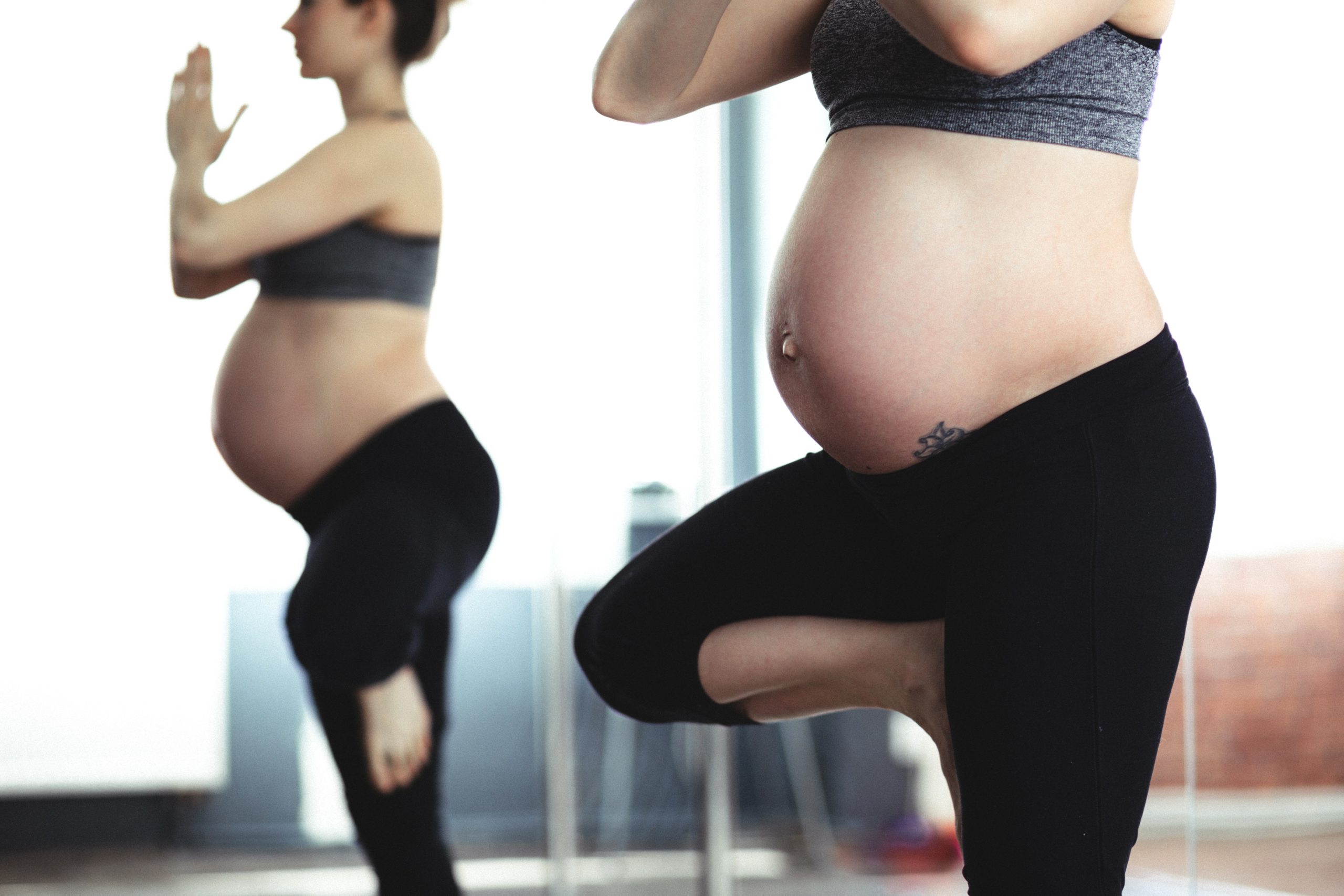
How to exercise during pregnancy

Exercise during pregnancy

Exercise during Pregnancy

by Robin Malanowski, PT, DPT

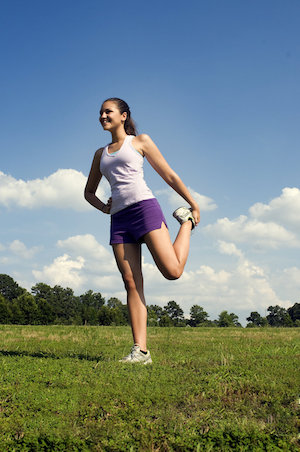
Research shows that exercise during pregnancy provides numerous health benefits including decreased pain, improved function of the heart and lungs, faster postpartum recovery, decreased insomnia, and gestational weight management. Current recommendations state that women who are pregnant should perform moderate, low-impact exercise 150 minutes a week.

High-Impact Activities and Adverse Outcomes

Average pregnant women who engage in high intensity exercise prevent excessive gestational weight gain, gestational diabetes, preeclampsia, pregnancy-induced hypertension, and even postpartum weight retention. This may also lead to better fetal outcomes (i.e. decreased risk of adult obesity, cardiovascular risk factors, and other chronic diseases). There is no significant association between vigorous exercise during pregnancy and preterm birth, unplanned C-section, low infant birth weight, or IUGR.

Diastasis of the Rectus Abdominus Muscle

Abdominal separation occurs when the tissue connecting the abdominal muscles stretches/thins. In pregnant women specifically, this separation results from a combination of core weakness and mechanical stress caused by fetal growth and organ displacement. Pregnant women should pay close attention to their core—especially when performing strenuous activities.

Exercise Adaptation

During pregnancy women experience numerous changes—belly size being the most predominant. These changes often require activity modification and occasional suspension. For instance, lying prone (on one’s stomach) should be discontinued until after birth. Another example is switching from jump squats to sumo squats to decrease impact and belly strain. Good form is perhaps the most important aspect to performing any exercise. If expecting mothers feel confident in their perinatal training and have no adverse responses to their exercises (vigorous or otherwise), then they may continue to perform those exercises throughout gestation. Above all else, women must listen to their bodies; if an activity causes pain or discomfort, then changes should be made.

What to Avoid

Women who are pregnant should avoid exercising in hot/humid climates; they should seek environments and wear clothing that permit adequate ventilation and cooling and ensure core temperature regulation. Pregnant women should also refrain from playing contact sports, doing activities that increase fall risk, and performing the Valsalva maneuver.

Warning Signs

Expecting mothers should be aware of the various signs that they are exercising too much. Signs include, chronic fatigue and feeling abnormally hot, dizzy, dehydrated, and/or weak. Vaginal bleeding or fluid leakage, chest pain, pain or swelling in the calf, and abnormal/painful uterine contractions are all major warning signs and warrant immediate consult.

If you have more questions about how to exercise during pregnancy, contact Dr. Malanowski at our Moon Valley clinic.  She can be reached at 602-843-8486.
What is Dry Needling and how can it help?

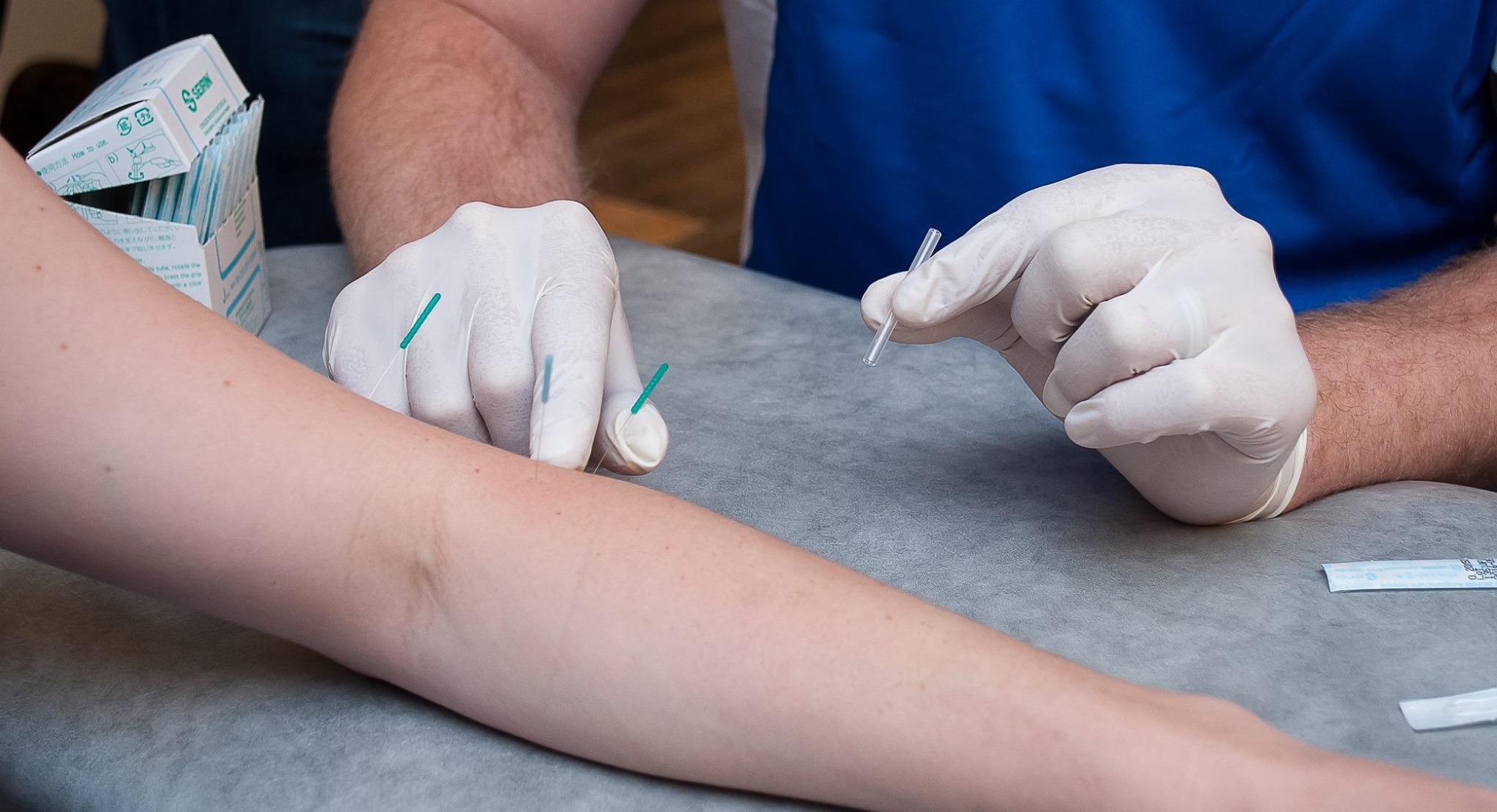
What is Dry Needling?
Dry Needling Contact Form

Have questions about Dry Needling? Fill out this form and we will contact you.

First
Last

What is Dry Needling?

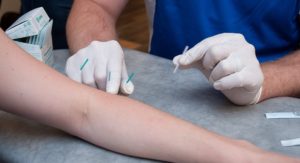
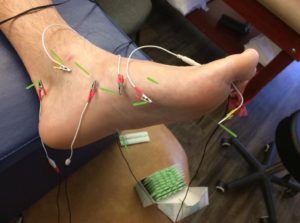
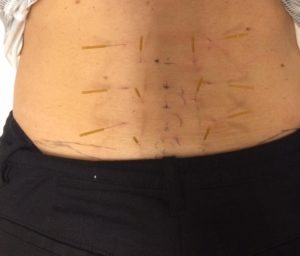
Dry Needling was originally developed  in the 1940’s by Janet Travell, MD, former medical adviser to the White House (JFK’s physician).  Dry needling is founded on modern understanding of human anatomy and pathophysiology and on modern scientific research, drawing heavily on leading edge neurological research using modern imaging techniques such as functional MRIs of the brain and real-time ultrasound.

Total Sports Therapy Cave Creek, North Phoenix, Glendale, and Moon Valley offices offers both Integrative Dry Needling and Functional Dry Needling (FDN).  It is a skilled technique performed by a physical therapist using filiform needles to penetrate the skin and/or underlying tissues to affect change in body structures and functions for the evaluation and management of neuromusculoskeletal conditions, pain, movements impairments and disability (FOSBPT 2015).  Dry needling is classified as an evidence based modern Western medical modality that is not based on Traditional Chinese Medical acupuncture.  It has it’s own unique theoretical concepts, terminology, techniques and clinical applications, completely separate from Chinese acupuncture.  In result, most insurances cover this service as a physical therapy modality.

Effectiveness of Treatment

Integrative Dry Needling, combined with physical therapy treatment, has been effective in treating the following conditions:

  • Acute and chronic tendonitis
  • Athletic and sports-related overuse injuries
  • Post-surgical pain
  • Neurological symptoms such as Bells Palsy and Shingles
  • Chronic pain conditions
  • Headaches and whiplash
  • Neck/lower back pain
  • Frozen shoulder
  • Tennis/golfers elbow
  • Muscle spasms
  • Fibromyalgia
  • Sciatica
  • Hip pain
  • Knee Pain
  • Plantar Fasciitis
  • Repetitive strain injuries
  • TMJ
  • Many other neuromusculoskeletal conditions

2019 NFL You Pick’em Contest

Are you ready for a little fun?  Join us for our weekly NFL “You Pick’em” Contest!  The rules and game are pretty simple.  Each Monday we will be updating this web page with new weekly football game picks.  They will include 3 Sunday game picks and one Monday Night Football combined score.  Complete the form below, before the first Sunday game pick and be entered for that week’s contest.  Each week a winner that choose the most right picks and closest total score for the Monday Night Football game will get a $10 Amazon Gift Card.  EVERY entry is entered into the Grand Prize drawing for an Amazon Show ($230 value).

Read More

Total Sports Performance launches new website

Check out our New Personal Training & Sports Performance Programs!

Many of you have known that Chris Matusz, CPT has been a key member of our Total Sports Physical Therapy team since 2009.  But you may not be aware he now runs our Sports Performance & Personal Training programs at our Cave Creek location.  His programs have helped our patients transition from physical therapy recovery into an active lifestyle and improving sports performance.

Chris’s experience working with patients provides a unique approach to his personal training that acknowledges pre-existing conditions and provides a safe, goal-oriented environment for his clients.

His athletic background and experience working with many of the local high school and youth sports leagues programs provides the foundation for his sports performance programs.  These programs are individualized to meet the athletes specific performance needs.

Check out our new Sports Performance & Personal Training website for more information about our programs and pricing!

TST welcomes new sports partner

FC Batavia (FCB) and Total Sports Therapy (TST) are pleased to announce a new partnership. Starting January 1st, 2019, TST and FCB will work together to provide FCB athletes with the best possible soccer training and sports therapy services. This natural fit will benefit both TST and FCB, but most importantly it will benefit the players.

FCB injured players will get able to get timely injury evaluation and physical therapy by TST.  FCB coaches will be also educated by TST in injury prevention and treatment while TST will be the official club medical trainers at future FCB events like tournaments, games, practice, etc.

Rick Tillman, owner/director of coaching, for FC Batavia says, “We are excited about our partnership with TST. Besides the obvious advantages like sponsorship and name recognition, we are looking forward to the medical benefits our players will now be offered. Unfortunately, injuries are part of youth soccer but with TST we know our young athletes are in very capable hands and will recover from their injuries as fully and as quickly as possible.”

We are are excited to be working with FC Batavia. Please check out their website for more information: https://fcbatavia.com/

vertigo

How can Physical Therapy help with Vertigo?

vertigoDizziness is an experience that 20-30% of all adults will experience throughout their lifetime but not all “dizziness” is easy to explain.  Vertigo is defined as “sensation of whirling or movement that results in error message in the central process of position, space, and time” or in other words spinning.
90% of all disability caused by “dizziness” is Benign Paroxysmal Positional Vertigo (BPPV).  BPPV is caused by the dislodging of sensory crystals within inner ear that can “get lost” in the semi-circular canals causing miscommunication to the brain on your position in space.  Signs and symptoms of BPPV are usually triggered by specific changes in head positioning and include:

  • Sudden sensation of spinning
  • Dizziness
  • Loss of balance
  • Nausea
  • Vomiting

Treatment

When researching you may find “self-treatments” for vertigo but it is recommended to avoid such treatments as it is possible to make symptoms worse.  A certified physical therapist (PT) can perform canalith repositioning techniques (CRT) to resolve symptoms in as little as 1 visit.  These include a series of strategic movements that the PT will direct in order to guide the crystals out of the semi-circular canals and eliminating symptoms.  Your therapist will also provide you with post-care with modifications to make daily for up to one week, reducing chances of symptoms returning.  If your symptoms are not caused by BPPV the therapist will further assess the cause.  In most cases a referral to a physical therapist is not required (dependent on insurance) but a cash rate is always offered to provide same day treatment.

thanksgiving picture

Happy Thanksgiving: How to cut 1000 calories from your Thanksgiving Meal!

thanksgiving picture

Happy Thanksgiving from the staff of Total Sports Therapy!  Did you know the average Thanksgiving meal is over 2,000 calories and that is before you have a second serving!  Here is the average Thanksgiving meal:

  • Turkey, white & dark meat, with skin, 6 ounces
  • Gravy, 1/3 cup
  • Mashed potatoes, 1 cup
  • Cranberry sauce, 1/3 cup
  • Green bean casserole, 1 cup
  • Sweet potato casserole topped with marshmallows, 1 cup
  • Dinner roll, 1
  • Butter, 1 tablespoon
  • Apple pie, 1 slice
  • Vanilla ice cream, ½ cup

To burn 1,000 calories you would have to:

  • Run – 9 miles
  • Bike – 22 miles
  • Jump Rope – continuously for 90 minutes

For many, it may be easier to just cut 1,000 calories from the meal.  Here are some simple ways to do this.

  • Turkey – eat only 3 oz. of Turkey without the skin (Average calorie savings 200)
  • Sweet potato casserole – ½ cup, without marshmallows (Average calorie savings 270)
  • Green bean casserole – ½ cup, without the french onion topping (Average calorie savings 140)
  • Mashed potatoes – ½ cup instead of 1 cup (Average calorie savings 200)
  • Apple pie – ½ cup low-fat vanilla or low fat whipped cream (Average calore savings 160)

By eating slowly you will feel the sensation of being full quickly and will be less inclined to go back for seconds.  Have a Happy and Healthy Thanksgiving!

hip flexor

Check your hips for back pain

Your low back pain may be coming from your hips

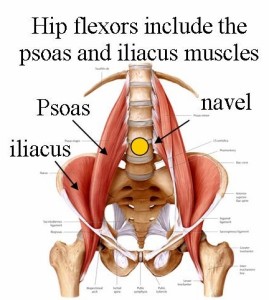
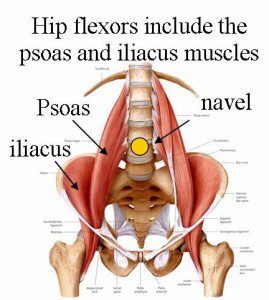
Having back pain is miserable, and not knowing why you might have back pain can be frustrating.  Often in treatment people focus purely on the back muscles, and getting very little relief.  This may be because they are focusing on the wrong muscle groups that may be causing your lower back pain.  In some cases the hip flexors may be causing your low back pain (see diagram below).

hip flexor

The hip flexors include the Psoas muscle which is a large muscle that originates at the lower levels of the lumbar spine and attaches to the femur.  Because the Psoas muscle originates at the lumbar spine, it can often be the root cause of your low back pain.

How do the hip flexors and more specifically your Psoas muscle cause low back pain?

Consider this, you spend most of your day with your hips in a flexed position, from sitting, sleeping (when side-lying), and even in exercising.  By putting your hip flexor muscles in a shortened position for long periods of time you eventually tighten this muscle so when you are standing or laying flat on your back with legs fully extended, you may experience back pain.

How to test if your Psoas muscle is tight

A simple test anyone can do is to lay flat on your back with legs fully extended.  How does this position feel?  Now, while laying flat on your back raise your knees while keeping your feet flat on the surface you are lying on.  Does this position feel better?  If so, this is a good sign that your Psoas muscle is tight.

How to stretch the Psoas muscle

Because the Psoas muscle is so deep it is very difficult to get to and isolate when stretching.  If you try these stretches and don’t get relief, seek a physical therapist.

Try the following stretches based on tolerance:

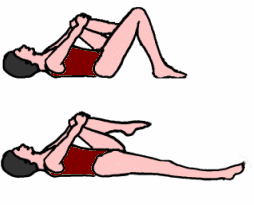
Supine single knee to chest – Keep one leg straight, while laying on your back, and pull the opposite knee to your chest. Do not let the straight leg flex at the hip.  Stretch should be mild.  Hold for 30 seconds for 3 repetitions.  This is a good stretch to start with for the hip flexors.  Once you feel that you can tolerate easily, progress to supine leg drop.


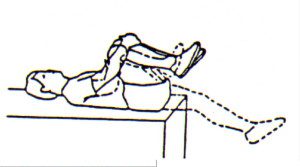
Supine leg drop – Laying at the edge of a table or bed, drop one leg over the edge so your hip is able to extend.  Pull the opposite knee to your chest. Stretch should be moderate.  Hold for 30 seconds for 3 repetitions.  Once you feel that you can tolerate easily, progress to kneeling hip flexor stretch.


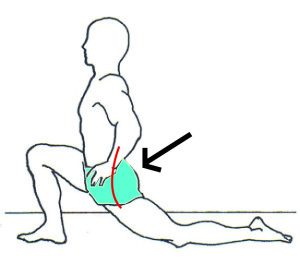
Kneeling hip flexor stretch – From a kneeling position, place one foot flat on the ground directly ahead of you.  Keep your other knee on the floor and press your hips forward. Stretch should be moderate to significant.  Hold for 30 seconds for 3 repetitions.  The stretch intensity can be controlled by adjusting how much you lean forward into the stretch.